

Ijraset Journal For Research in Applied Science and Engineering Technology
Home Healthcare Services Management System
Authors: Gubbala Hema Maheswari, Bonthu Tanuja, Divvi Anitha Raji, Rampalli Viswas, Vennapu Vinay, Adabala Rama Krishna
DOI Link: https://doi.org/10.22214/ijraset.2026.77466
Certificate: View Certificate
Abstract
Home healthcare services play a vital role in providing medical assistance to patients within their homes, especially for elderly individuals, chronically ill patients, and those requiring post-hospitalization care. Traditional home healthcare management systems rely heavily on manual processes such as paper-based records, phone calls, and fragmented communication between patients, doctors, and service providers. These approaches are inefficient, error-prone, and lack real-time accessibility. This project presents a Home Healthcare Services Management System, a web-based application developed using Python (Flask framework) for backend processing, HTML, CSS, and JavaScript for frontend design, and MySQL for database management. The system enables patients to book healthcare services online, doctors to manage and approve appointments, and administrators to oversee operations through role-based access control. By automating booking, scheduling, and status tracking, the system improves efficiency, transparency, and data accuracy. The proposed system reduces manual workload and provides a scalable, secure solution for modern home healthcare management.
Introduction
The growing demand for home healthcare services—driven by population aging, increasing chronic diseases, and the need for cost-effective care—has highlighted the importance of efficient healthcare management systems. Home healthcare enables patients to receive medical services such as nursing, physiotherapy, diagnostics, and elderly care at home. However, traditional manual systems face challenges including scheduling conflicts, communication gaps, data redundancy, and lack of real-time updates.
Earlier healthcare information systems primarily focused on hospital environments and relied on centralized, paper-based processes. These systems lacked flexibility and were not designed for decentralized home care services. With advancements in web technologies and databases, there is a need for automated platforms that support seamless coordination among patients, caregivers, and administrators.
Proposed Solution
The Home Healthcare Services Management System is a web-based application developed using:
-
Python Flask (Backend)
-
MySQL (Database)
-
HTML & CSS (Frontend)
The system provides a centralized platform that enables:
-
Online service booking
-
Appointment approval and rejection
-
Real-time appointment status tracking
-
Secure data handling
This automation improves accessibility, reduces human error, and enhances operational efficiency.
Problem Statement
Manual home healthcare systems suffer from:
-
Inefficient appointment scheduling
-
Poor communication between patients and doctors
-
Lack of real-time updates
These issues necessitate an integrated, web-based solution combining patient registration, service booking, doctor approval, and administrative control.
System Architecture
The system follows a three-tier architecture:

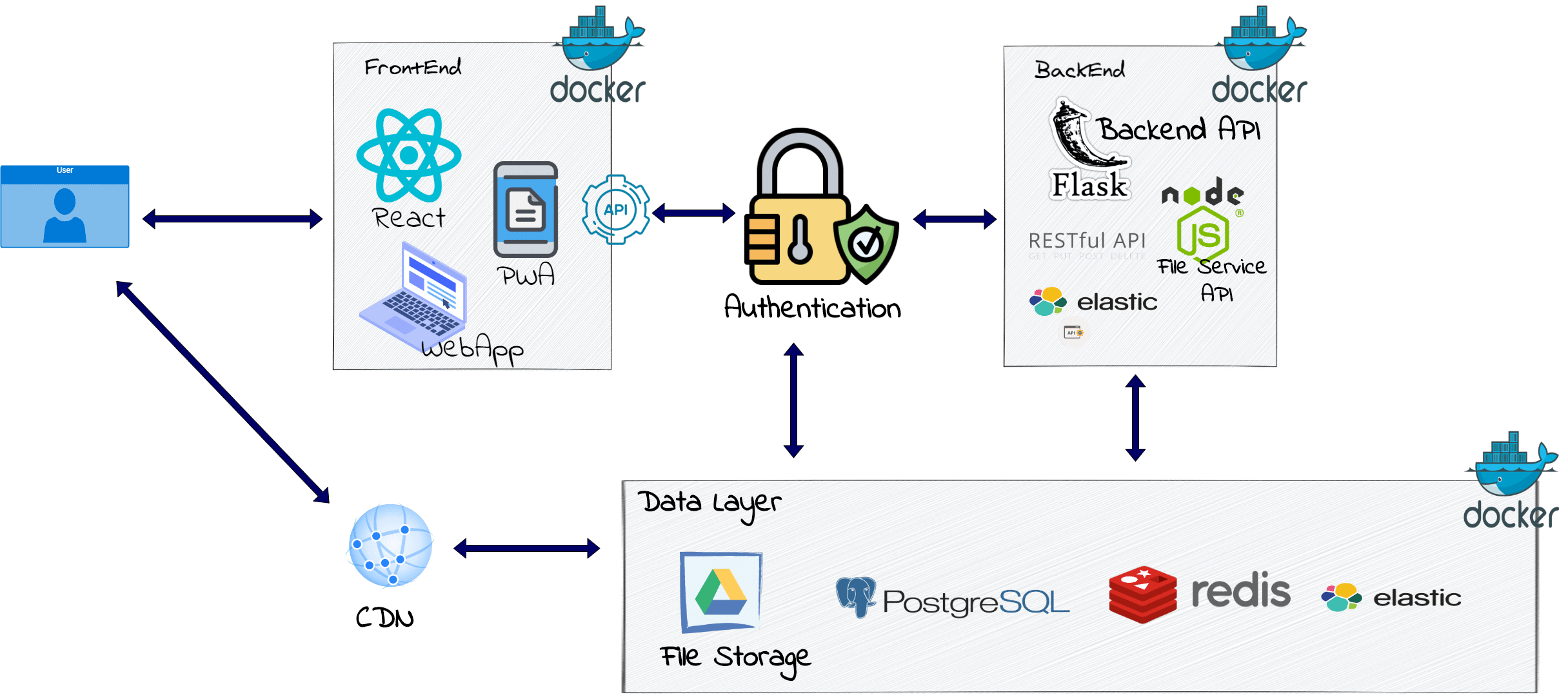

4
1?? Presentation Layer
-
Built using HTML and CSS
-
Provides user-friendly interfaces for patients, doctors, and administrators
2?? Application Layer
-
Developed using Python Flask
-
Handles business logic such as authentication, appointment scheduling, service allocation, and validation
3?? Database Layer
-
MySQL database
-
Stores patient records, caregiver details, service requests, and appointment history
System Modules
1?? Authentication Module
-
Secure login and registration
-
Encrypted passwords and session management
2?? Patient Module
-
Registration and login
-
Book home healthcare services
-
View appointment status (Pending / Accepted / Rejected)
3?? Doctor Module
-
View assigned bookings
-
Accept or reject appointments
-
Update appointment status
4?? Admin Module
-
Monitor users and bookings
-
Manage system operations
-
Ensure service availability
5?? Database Management Module
-
Maintains all system data
-
Ensures data integrity and secure interaction
-
Supports efficient query execution
Implementation Details
The backend uses Flask for:
-
Handling HTTP requests
-
URL routing
-
Session management
-
Database connectivity via MySQL connectors
The frontend ensures browser compatibility and responsive design. The integration of Flask with MySQL supports efficient data retrieval, secure storage, and reliable system performance.
Results and Discussion
The system was tested under multiple scenarios, including:
-
Patient service booking
-
Doctor approval workflow
-
Real-time status updates
Results showed:
-
Minimal response time
-
Reduced manual effort
-
Improved accuracy
-
Secure role-based access control
-
Reliable and scalable performance
The system is suitable for real-time deployment in home healthcare environments.
Conclusion
The Home Healthcare Services Management System provides an effective solution for automating healthcare service delivery at home. By integrating web technologies with database-driven design, the system improves efficiency, transparency, and user experience. The modular architecture allows future enhancements such as notification systems and analytics. Overall, the project successfully meets its objectives and offers a practical solution for modern home healthcare management.
References
[1] J. D. Ullman, Principles of Database and Knowledge-Base Systems, Computer Science Press, 1988. [2] H. M. Deitel and P. J. Deitel, Internet and World Wide Web: How to Program, Prentice Hall, 2001. [3] R. S. Pressman, Software Engineering: A Practitioner’s Approach, 5th ed., McGraw-Hill, 2001. [4] Sommerville, Software Engineering, 6th ed., Addison-Wesley, 2001. [5] Turban, J. E. Aronson, and T. Liang, Decision Support Systems and Intelligent Systems, Prentice Hall, 2001. [6] Silberschatz, H. F. Korth, and S. Sudarshan, Database System Concepts, 4th ed., McGraw-Hill, 2002. [7] Nielsen, Usability Engineering, Morgan Kaufmann, 1993. [8] R. T. Fielding, “Architectural Styles and the Design of Network-Based Software Architectures,” Ph.D. dissertation, University of California, Irvine, 2000. [9] Fowler, Analysis Patterns: Reusable Object Models, Addison-Wesley, 1997. [10] IEEE Computer Society, IEEE Standard for Software Requirements Specifications, IEEE Std 830-1998. [11] Comer, Internetworking with TCP/IP: Principles, Protocols, and Architecture, 4th ed., Prentice Hall, 2000. [12] Booch, J. Rumbaugh, and I. Jacobson, The Unified Modeling Language User Guide, Addison-Wesley, 1999. [13] R. Elmasri and S. B. Navathe, Fundamentals of Database Systems, 3rd ed., Addison-Wesley, 2000. [14] Jalote, An Integrated Approach to Software Engineering, Narosa Publishing House, 2001. [15] J. Date, An Introduction to Database Systems, 7th ed., Addison-Wesley, 2000. [16] Connolly and C. Begg, Database Systems: A Practical Approach to Design, Implementation, and Management, 3rd ed., Addison-Wesley, 2002. [17] Martin, Information Engineering: Introduction, Prentice Hall, 1990. [18] Yourdon, Modern Structured Analysis, Prentice Hall, 1989 [19] B. Schneier, Applied Cryptography: Protocols, Algorithms, and Source Code in C, 2nd ed., Wiley, 1996. [20] J. K. Galbraith, Designing Complex Organizations, Addison-Wesley, 1973. [21] W. J. Clancey, Situated Cognition: On Human Knowledge and Computer Representations, Cambridge University Press, 1997. [22] L. Bass, P. Clements, and R. Kazman, Software Architecture in Practice, Addison-Wesley, 1998. [23] A. S. Tanenbaum, Computer Networks, 3rd ed., Prentice Hall, 1996. [24] J. E. Hopcroft, R. Motwani, and J. D. Ullman, Introduction to Automata Theory, Languages, and Computation, 2nd ed., Addison-Wesley, 2001. [25] H. C. Lau and C. S. Wong, “Healthcare Information Systems: Design and Implementation Issues,” Journal of Medical Systems, vol. 25, no. 2, pp. 75–86, 2001.
Copyright
Copyright © 2026 Gubbala Hema Maheswari, Bonthu Tanuja, Divvi Anitha Raji, Rampalli Viswas, Vennapu Vinay, Adabala Rama Krishna. This is an open access article distributed under the Creative Commons Attribution License, which permits unrestricted use, distribution, and reproduction in any medium, provided the original work is properly cited.

Download Paper
Paper Id : IJRASET77466
Publish Date : 2026-02-13
ISSN : 2321-9653
Publisher Name : IJRASET
DOI Link : Click Here
 Submit Paper Online