

Ijraset Journal For Research in Applied Science and Engineering Technology
Role-based Leave Management System Using Spring Boot and RESTful Architecture
Authors: Raghabendra Kumar Shah, Aman Verma, Pabitra Khatri, Pasupuleti Niranjan, B. Ganga Bhavani
DOI Link: https://doi.org/10.22214/ijraset.2026.77447
Certificate: View Certificate
Abstract
Traditional leave management processes in academic and corporate institutions continue to suffer from inefficiencies caused by paper-based workflows, weak validation, inconsistent leave balance tracking, and limited system integration. Although several web-based solutions exist, many lack transactional consistency, enforce minimal business rules, or fail to follow modular architectural principles. This paper presents the design and implementation of a role-based Employee Leave Management System developed using Spring Boot and RESTful architectural principles. The system follows a layered architecture separating controller, service, repository, and data transfer con- cerns to improve maintainability and extensibility. Core business rules—including non-overlapping leave validation, balance sufficiency checks, controlled status transitions, and role restricted operations—are enforced at the service layer with declarative transaction man- agement ensuring atomicity and data consistency. A key design decision defers leave balance deduction until managerial approval rather than request submission, preventing balance inconsistencies for rejected requests. Functional validation confirms correct enforcement of business rules and transactional behavior across common and edge-case scenarios. The proposed system demonstrates how structured ar- chitectural design and transaction-aware workflows can address limitations observed in existing leave management solutions and provides a foundation for further enhancement toward production-ready HR system integration.
Introduction
Human Resource Management (HRM) includes essential organizational processes such as employee administration, attendance tracking, payroll processing, and leave management. Among these, leave management is operationally complex due to the need for coordination between employees, managers, HR, attendance, and payroll departments. Traditional paper-based and spreadsheet-driven systems cause delays, calculation errors, lack of transparency, and poor synchronization across departments.
Although digital leave management systems have been developed, many existing solutions suffer from architectural weaknesses, inadequate transaction management, limited validation mechanisms, and poor scalability. To address these issues, this paper presents an academic prototype of a Leave Management System implemented as a RESTful web service using Spring Boot 4.0.1 and Java 21, following modern enterprise architectural principles.
Problem Overview
Traditional and early digital systems exhibit the following issues:
-
Manual routing and slow approval workflows
-
Error-prone leave balance calculations
-
Lack of centralized, real-time visibility
-
Poor transaction handling during multi-step approval operations
-
Weak server-side validation
-
Inconsistent leave balance deduction policies
-
Inadequate overlap detection logic
These issues result in inefficiencies, inconsistencies, and maintainability challenges.
Literature Review Insights
Existing systems can be categorized into:
-
Web-Based Systems (PHP/MySQL)
-
Focused on replacing paperwork
-
Weak architectural layering
-
Limited validation and transaction control
-
-
Platform-Specific Solutions (Android apps)
-
Improved mobility
-
Limited cross-platform integration
-
-
Framework-Based Implementations (e.g., MERN stack)
-
Modern UI and REST APIs
-
Insufficient transaction guarantees
-
Integrity risks during concurrent updates
-
-
AI-Driven Systems
-
Intelligent automation
-
High complexity
-
Limited focus on transactional integrity
-
Identified Gaps
-
Poor separation of concerns
-
Validation only at UI level
-
Non-atomic multi-step operations
-
Weak overlapping leave detection
-
Inconsistent leave balance deduction
The proposed system addresses these through strict architectural layering, robust server-side validation, atomic transaction management, and advanced overlap detection.
System Architecture
The system follows a three-tier client–server architecture:


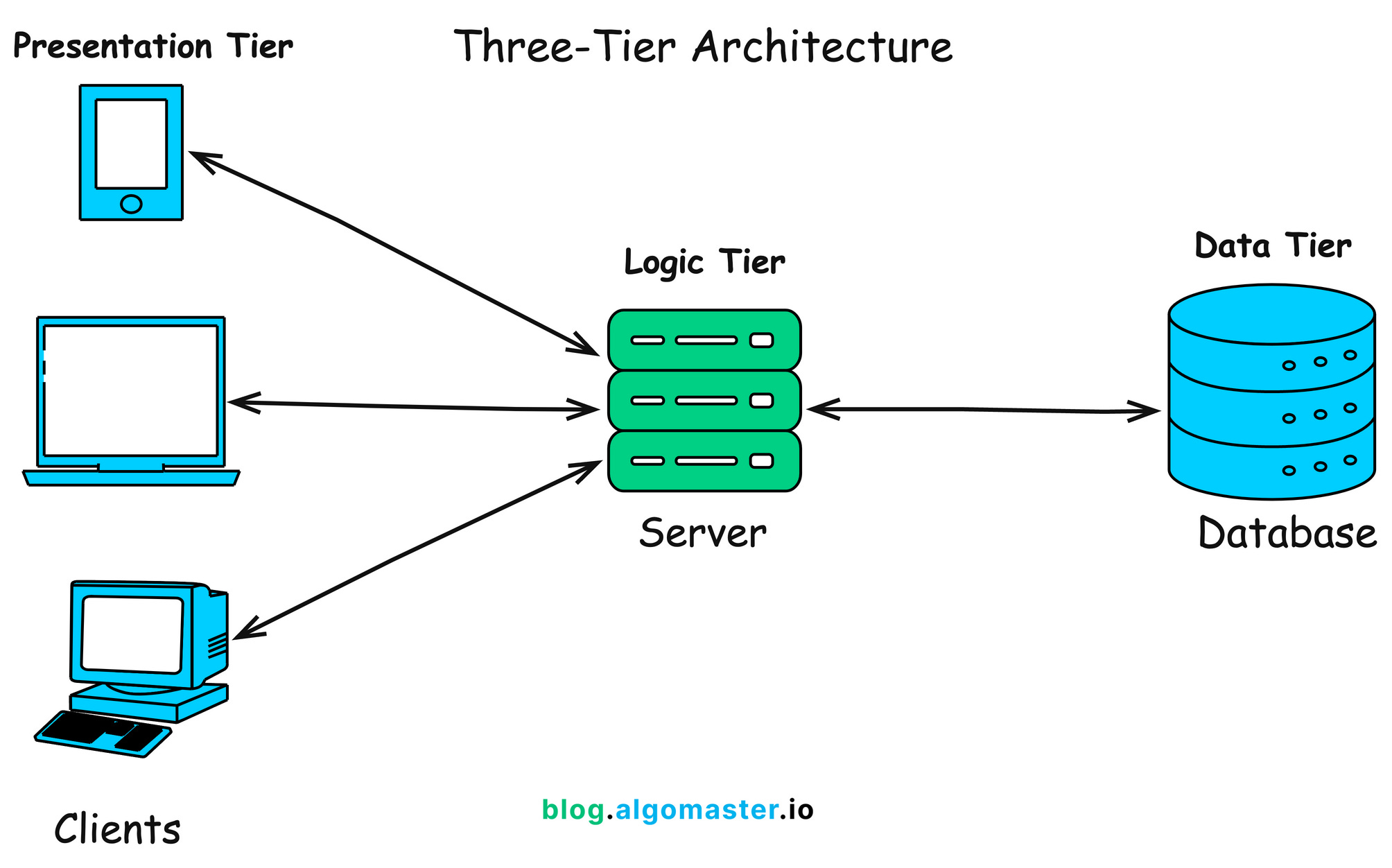
4
1?? Presentation Tier
-
ReactJS frontend
-
Handles leave submission, tracking, and approval
-
Communicates via REST APIs
2?? Application Tier
-
Built using Spring Boot
-
Implements Controller–Service–Repository pattern
-
Contains validation logic and transaction coordination
3?? Data Tier
-
MySQL relational database
-
Managed via Hibernate ORM
-
Ensures ACID compliance and referential integrity
RESTful API Design
The system exposes 20 REST endpoints across 8 controllers, including:
-
Authentication
-
Employee management
-
Department management
-
Leave request lifecycle
-
Attendance
-
Payroll
-
Holiday calendar
Key REST principles followed:
-
Resource-oriented endpoints
-
Proper HTTP verbs (GET, POST, PUT)
-
JSON-based communication
-
Standard HTTP status codes
-
Use of Data Transfer Objects (DTOs)
Data Model
The database includes seven core entities:
-
User (authentication & role)
-
Employee (organizational profile)
-
Department
-
LeaveRequest (PENDING, APPROVED, REJECTED)
-
Attendance
-
Payroll
-
Holiday
Entity relationships are defined using JPA annotations with foreign key constraints to ensure referential integrity.
Core Implementation Highlights
1?? Strict Architectural Layering
-
Controller → Service → Repository separation
-
Improves maintainability and testability
2?? Comprehensive Server-Side Validation
Validation includes:
-
Date validation (no past dates)
-
Chronological validation (end ≥ start)
-
Leave type validation
-
Employee existence verification
3?? Advanced Overlapping Leave Detection
Uses JPQL query to detect:
-
Partial overlaps
-
Full containment
-
Inverse containment
Ensures no conflicting leave requests exist for the same employee.
4?? Transaction Management
Spring’s declarative @Transactional annotations ensure:
-
Atomic updates of leave status and balance
-
Prevention of partial updates
-
Consistency across multi-table operations
Balance deduction occurs only during approval, preventing discrepancies from rejected requests.
Technology Stack
-
Spring Boot 4.0.1
-
Java 21
-
Spring Data JPA
-
Hibernate ORM
-
MySQL
-
Maven
-
ReactJS (frontend)
The research contribution primarily focuses on backend architecture and transactional integrity.
Key Contributions
This system demonstrates:
-
Proper enterprise-level architectural layering
-
Robust validation beyond UI constraints
-
Atomic transaction coordination
-
RESTful API design best practices
-
Conclusion
This paper presents a Leave Management System prototype demonstrating layered architecture, comprehensive validation, transaction management, and RESTful API design. The system confirms key software engineering principles through working code. The layered architectural approach supports maintainability and clear separation of concerns, while transaction-coordinated workflows prevent data inconsistencies during concurrent operations or failure scenarios. The system demonstrates the effectiveness of modern enterprise Java frameworks in developing structured and reliable leave management solutions.
References
[1] Adamu, \"Employee Leave Management System,\" FUDMA Journal of Sciences (FJS), vol. 4, no. 2, pp. 86–91, 2020. doi: 10.33003/fjs-2020-0402-162. [2] N. Harshika, P. U. Vardhan, C. Vaishak, A. Akhil, B. Varshitha, and S. S. Raoof, \"A Multi-Faceted Leave Management Ecosystem Employing AI-Driven Semantic Categorization and Probabilistic Algorithms with Dynamic Schedule Reallocation,\" International Journal of Progressive Research in Engineering Management and Science (IJPREMS), vol. 5, no. 4, pp. 1145–1153, 2025. [3] S. M. Alade, S. Adejumo, and T. J. Alade, \"Design and Implementation of a Web Based Leave Management System,\" International Journal of Computer Applications Technology and Research, vol. 11, no. 4, pp. 123–144, 2022. doi: 10.7753/IJCATR1104.1006. [4] R. Srinithi and P. Sakthi Murugan, \"Employee Leave Management System,\" International Journal of Innovative Research in Electri- cal, Electronics, Instrumentation and Control Engineering (IJIREEICE), vol. 13, no. 4, pp. 198–202, 2025. doi: 10.17148/IJIREE- ICE.2025.13432. [5] Rashmi, S. S. Dhulugade, P. N. Gaikwad, and D. M. Rathod, \"Leave Management in Power Apps,\" International Journal of Innovative Research in Technology (IJIRT), vol. 11, no. 1, pp. 674–679, June 2024. [6] R. S. Birje, R. Benne, and A. Unki, \"Design and Development of E – Leave Management System,\" International Journal of Research Publication and Reviews, vol. 6, no. 10, pp. 6464–6472, 2025. [7] N. Choudhary, A. Khalfe, Y. Khan, and M. Ansari, \"Leave Management System for AIKTC,\" International Research Journal of Engineering and Technology (IRJET), vol. 7, no. 3, pp. 1715–1717, Mar. 2020. [8] M. Singh, P. Singh, R. Singh, S. Singh, and S. Gupta, \"Leave and Payroll Management System,\" in Proc. International Conference on Computing and Virtualization (ICCCV-17), Thakur College of Engineering and Technology, 2017, pp. 62–66. [9] R. Sapona, A. H. Thohari, and Nelmiawati, \"Web-based Leave Management System for Politeknik Negeri Batam,\" Journal of Com- puter Sciences and Engineering, pp. 72–74, 2020. [10] Y. Mantri, D. A. R. Kumar, and S. U. Kumar, \"Emergency Leave Management System with Company Data Analysis,\" International Journal of Research in Engineering and Science, vol. 11, no. 21, pp. 163–174, 2023. ISSN: 2320-9364. [11] A. I. Pathan, B. Nayak, B. Nayak, V. B. Dhatrak, and A. K. Daivat, \"An Design of AI Based Leave Scheduling and Managing Application,\" International Journal of Computer Sciences and Engineering, vol. 8, no. 4, 2020. doi: 10.26438/ijcse/v8i4.115. [12] S. D. Jadhav, A. A. Ranaware, and P. D. More, \"Design Steps of Online Leave Management Application System for Academic Institution,\" in Proc. National Conference on Emerging Trends in Science and Advances in Engineering, Phaltan, India: International Journal of Innovations in Engineering Research and Technology, 2023. [13] V. K. Kaushik, A. K. Gupta, A. Kumar, and A. Prasad, \"Student Leave Management System,\" International Journal of Advance Research and Innovative Ideas in Education, vol. 3, no. 5, pp. 124–131, 2017.
Copyright
Copyright © 2026 Raghabendra Kumar Shah, Aman Verma, Pabitra Khatri, Pasupuleti Niranjan, B. Ganga Bhavani. This is an open access article distributed under the Creative Commons Attribution License, which permits unrestricted use, distribution, and reproduction in any medium, provided the original work is properly cited.

Download Paper
Paper Id : IJRASET77447
Publish Date : 2026-02-12
ISSN : 2321-9653
Publisher Name : IJRASET
DOI Link : Click Here
 Submit Paper Online